Homemade Spicy Kimchi with Seaweed and Pear Recipe
Introduction
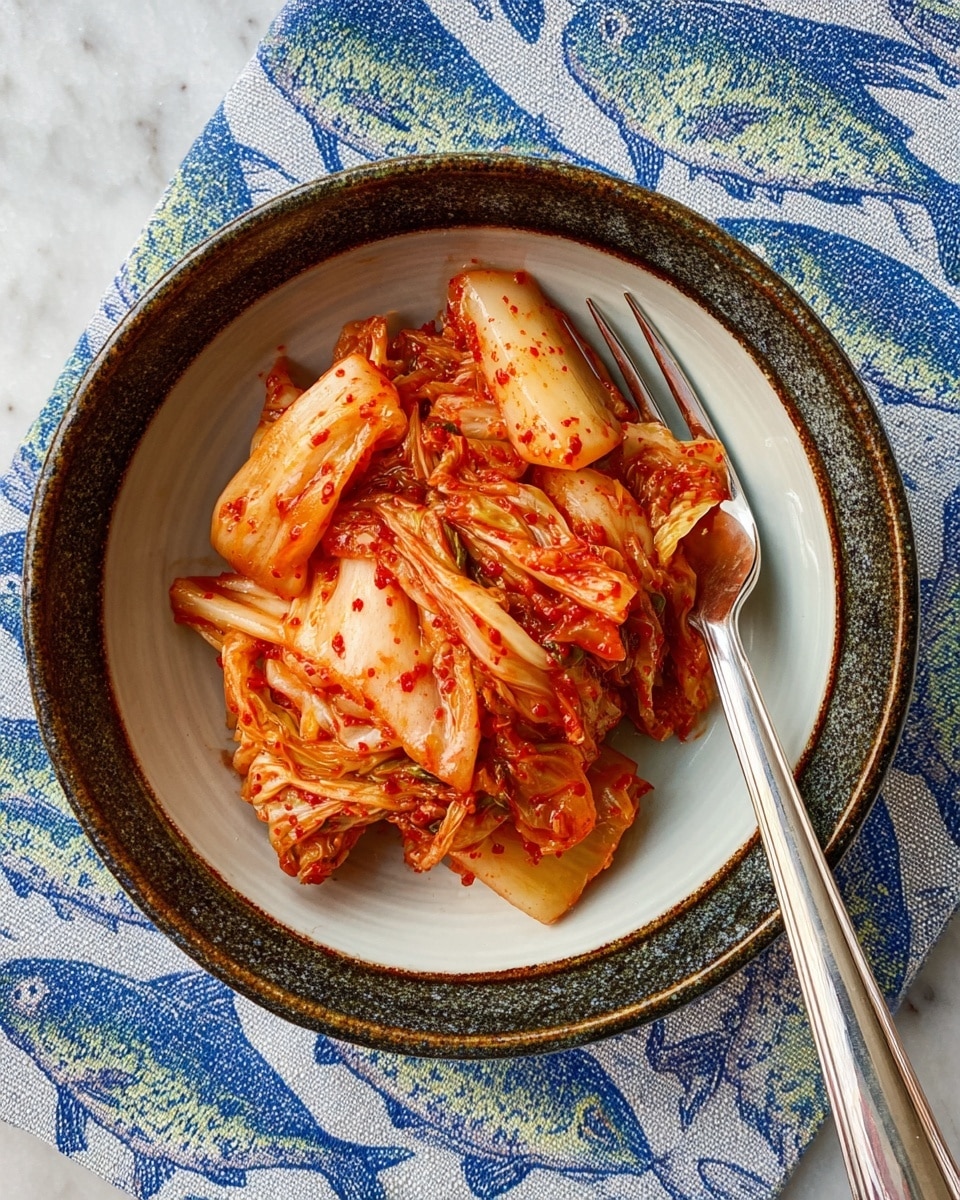
Kimchi is a traditional Korean fermented side dish packed with bold flavors and vibrant colors. This recipe combines crunchy Chinese leaf with spicy, garlicky chili paste, making a perfect condiment to enliven any meal. It’s easy to prepare and fun to ferment at home.
Ingredients
- 2-3 Chinese leaf (2kg prepared weight)
- 40-60g sea salt (3% of the cabbage weight)
- 1 tbsp seaweed (wakame), lightly rinsed
- 1 carrot
- ½ leek
- 2 spring onions
- 40g onion, chopped
- 40g garlic (10 cloves), peeled
- 5g ginger, chopped
- 1 small pear, cored and chopped
- 40g Korean chilli flakes (use less if you prefer it milder)
- 1 2-litre sterilised jar
Instructions
- Step 1: Chop the Chinese leaf into bite-size pieces and weigh to 2kg. Wash thoroughly under running water. In a large bowl, mix the Chinese leaf with the sea salt and seaweed.
- Step 2: Over 3-4 hours, stir the salted mixture every so often with your hands to help release liquid. The leaves should become flexible without breaking.
- Step 3: Meanwhile, shred the carrot and leek, and chop the spring onions. Set them aside.
- Step 4: In a food processor, blend the onion, garlic, ginger, and pear until smooth. Add the Korean chilli flakes and pulse again to combine into a paste.
- Step 5: Drain the Chinese leaf mixture well, squeezing out as much water as possible—this can take about 10 minutes.
- Step 6: Toss the drained Chinese leaf with the prepared vegetables. Add the chili paste and mix thoroughly to coat everything evenly.
- Step 7: Pack the mixture tightly into the sterilised jar, leaving about a 1-inch space under the lid. Use a fermentation weight or a bag of baking beans to keep the kimchi submerged. Place a plate underneath to catch any overflow.
- Step 8: Let the kimchi ferment at room temperature. Within 24-48 hours, you’ll notice bubbles indicating fermentation has started.
- Step 9: Taste the kimchi during fermentation to check flavor development. Once it reaches your preferred taste, transfer it to the fridge to slow fermentation and enjoy. You may want to divide into smaller jars for convenience or gifting.
Tips & Variations
- Adjust the amount of Korean chilli flakes to control spiciness to your liking.
- Use a pear or apple to add natural sweetness and aid fermentation.
- If you don’t have a fermentation weight, tightly sealed plastic bags filled with water or baking beans work well to keep vegetables submerged.
- For a milder version, reduce garlic or chili, or omit the pear for less sweetness.
Storage
Store kimchi in an airtight jar in the refrigerator once fermentation reaches your preferred taste. It will keep for several weeks, gradually becoming tangier over time. Always use clean utensils to avoid contamination. Before serving, you can let it sit at room temperature briefly to awaken flavors.
How to Serve
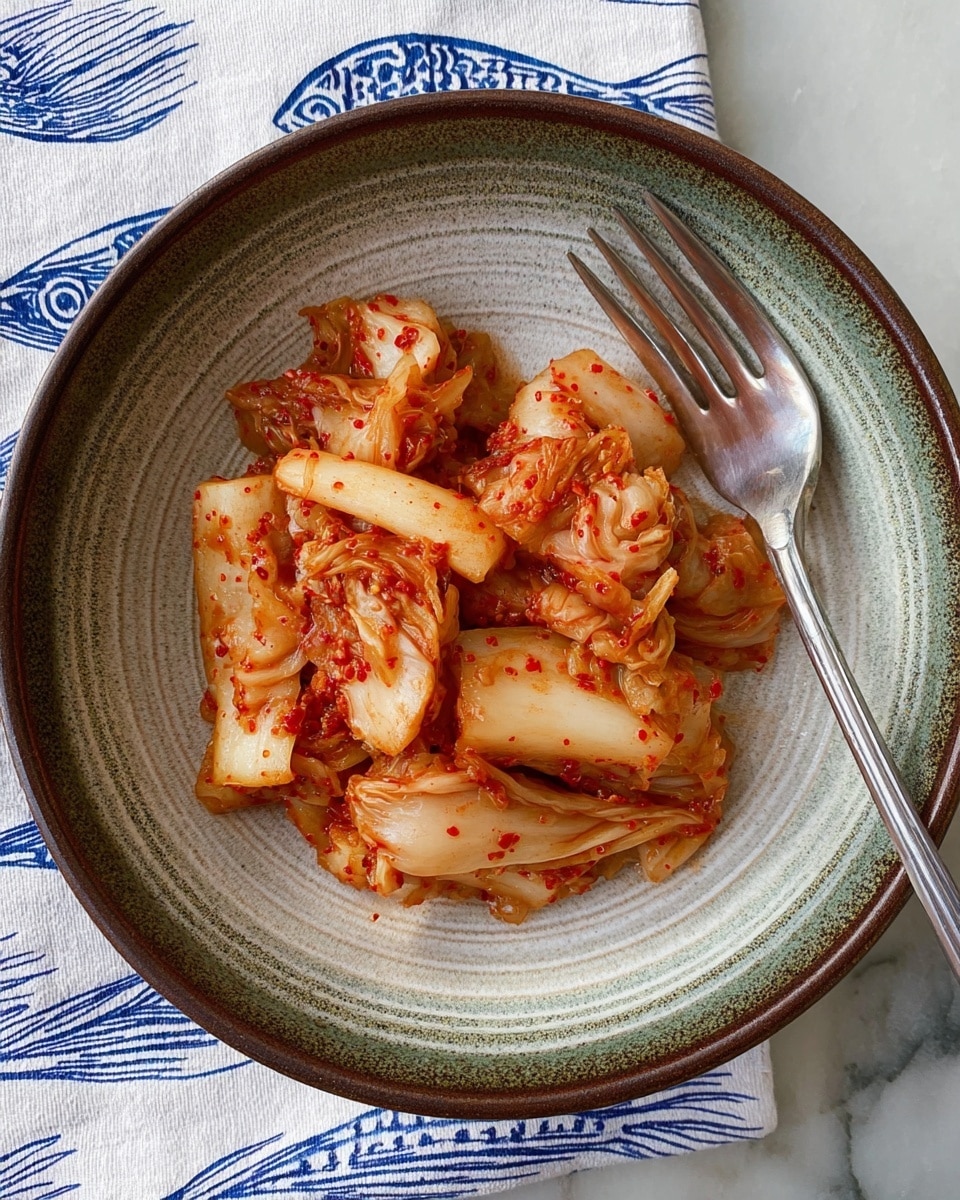
Serve this delicious recipe with your favorite sides.
FAQs
How long does kimchi take to ferment?
At room temperature, fermentation usually begins within 1-2 days, with bubbles appearing. The ideal fermentation time varies by taste but generally ranges from 3 to 7 days before moving it to the fridge.
Can I use other types of cabbage?
Yes, Napa cabbage (Chinese leaf) is traditional, but you can experiment with regular green cabbage or other leafy greens, adjusting salting and fermentation times accordingly.
Print
Homemade Spicy Kimchi with Seaweed and Pear Recipe
- Total Time: 3 hours 20 minutes to 4 hours 20 minutes (including salting and preparation)
- Yield: Approximately 2 litres of kimchi 1x
- Diet: Vegan
Description
A traditional homemade kimchi recipe featuring fermented Chinese leaf mixed with aromatic vegetables and a spicy chili paste. This classic Korean side dish is perfect for adding tangy, spicy flavor to any meal and is made using a natural fermentation process that develops rich, probiotic qualities over time.
Ingredients
Vegetables
- 2–3 Chinese leaf (2kg prepared weight)
- 1 carrot, shredded
- ½ leek, shredded
- 2 spring onions, chopped
- 40g onion, chopped
- 40g garlic (10 cloves), peeled
- 5g ginger, chopped
- 1 small pear, cored and chopped
Seasonings & Others
- 40–60g sea salt (3% of the cabbage weight)
- 1 tbsp seaweed (wakame), lightly rinsed
- 40g Korean chilli flakes (adjust to preferred heat level)
- A 2-litre sterilised jar
Instructions
- Prepare and Salt the Chinese Leaf: Chop the Chinese leaf into bite-sized pieces ensuring a total weight of 2kg, then wash under running water. Place the chopped leaf into a large bowl and mix with 40-60g sea salt and 1 tbsp rinsed seaweed. Set aside.
- Salt and Soften the Cabbage: Over the course of 3-4 hours, mix the salted Chinese leaf and seaweed with your hands periodically. During this time, the cabbage will release liquid and soften. The goal is to be able to bend the pieces without breaking them.
- Prepare Vegetables and Chili Paste: While the cabbage is salting, shred the carrot and leek, and chop the spring onions. In a food processor, blitz together the chopped onion, garlic, ginger, and pear until puréed. Add the Korean chilli flakes and blitz again to thoroughly combine into a chili paste.
- Drain the Cabbage: After 3-4 hours, drain the salted cabbage mixture thoroughly, squeezing out as much water as possible, which may take around 10 minutes.
- Mix Ingredients: Toss the drained cabbage with the shredded carrot, leek, and chopped spring onions. Add the chili paste and mix well until everything is evenly coated.
- Pack and Ferment: Transfer the mixture into a sterilised 2-litre jar, packing it tightly and minimizing air pockets. Leave about a 1-inch space from the top. Place a fermentation weight or a bag of baking beans on top to keep the vegetables submerged. Place a plate under the jar to catch any overflow.
- Fermentation and Storage: Allow the kimchi to ferment at room temperature for 24-48 hours until bubbles appear indicating fermentation has started. Taste periodically to monitor flavor development. Once it reaches your preferred taste, store it in the fridge to slow fermentation and enjoy. Transfer to smaller jars for convenience, or gift to family and friends.
Notes
- Adjust the amount of Korean chili flakes based on your heat preference.
- The fermentation time can vary depending on ambient temperature; warmer environments speed up fermentation.
- Ensure the vegetables stay submerged under the liquid to avoid mold during fermentation.
- Use a sterilised jar and utensils to prevent unwanted bacteria growth.
- Kimchi develops more complex flavors the longer it ferments, but can become quite sour if left too long.
- Prep Time: 20 minutes (plus 3-4 hours salting resting time)
- Cook Time: 0 minutes (no cooking involved)
- Category: Fermented Vegetables
- Method: No-Cook
- Cuisine: Korean
Keywords: kimchi, fermented vegetables, Korean recipe, spicy fermented cabbage, homemade kimchi, probiotic foods, vegan kimchi