Homemade Rasmalai with Saffron, Almonds, and Pistachios Recipe
Introduction
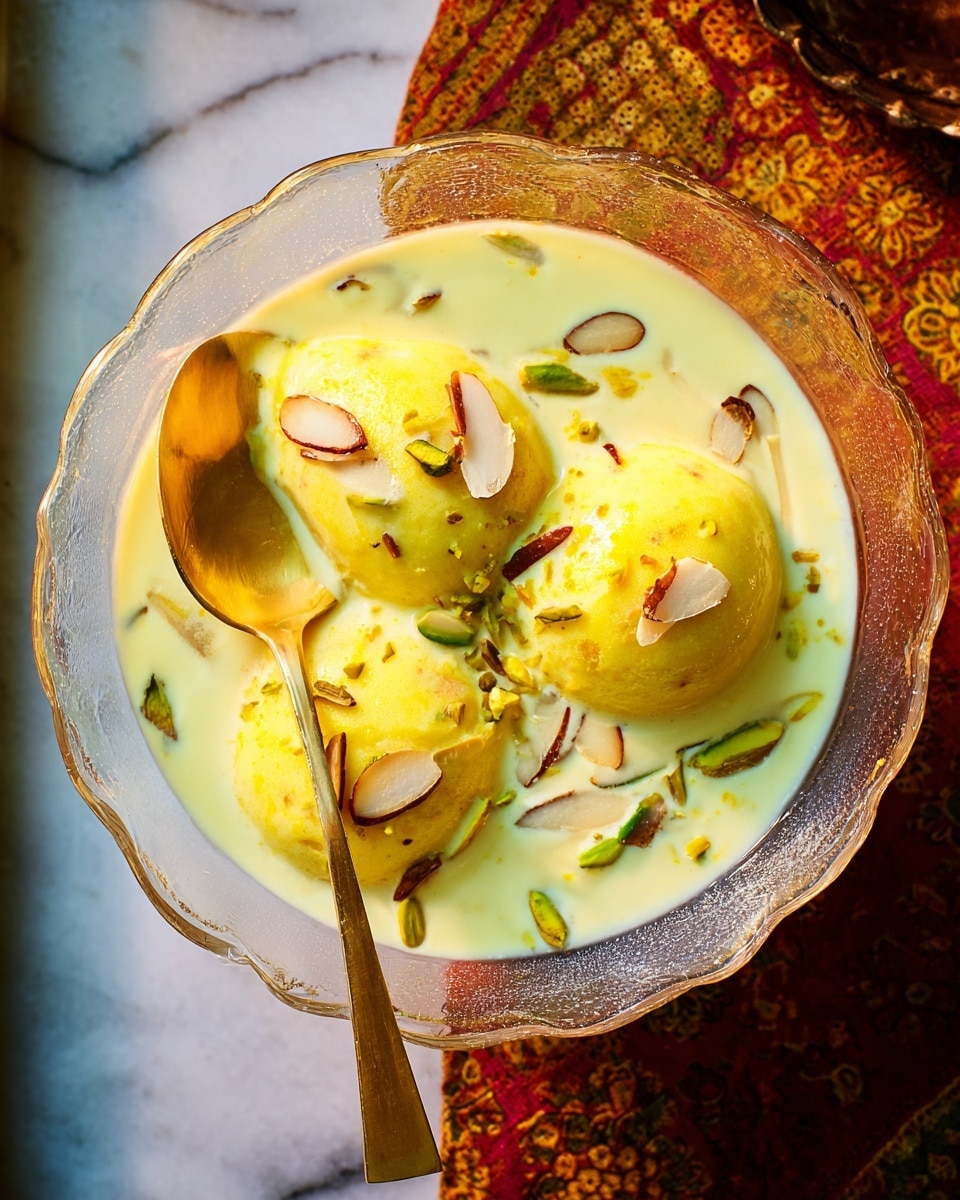
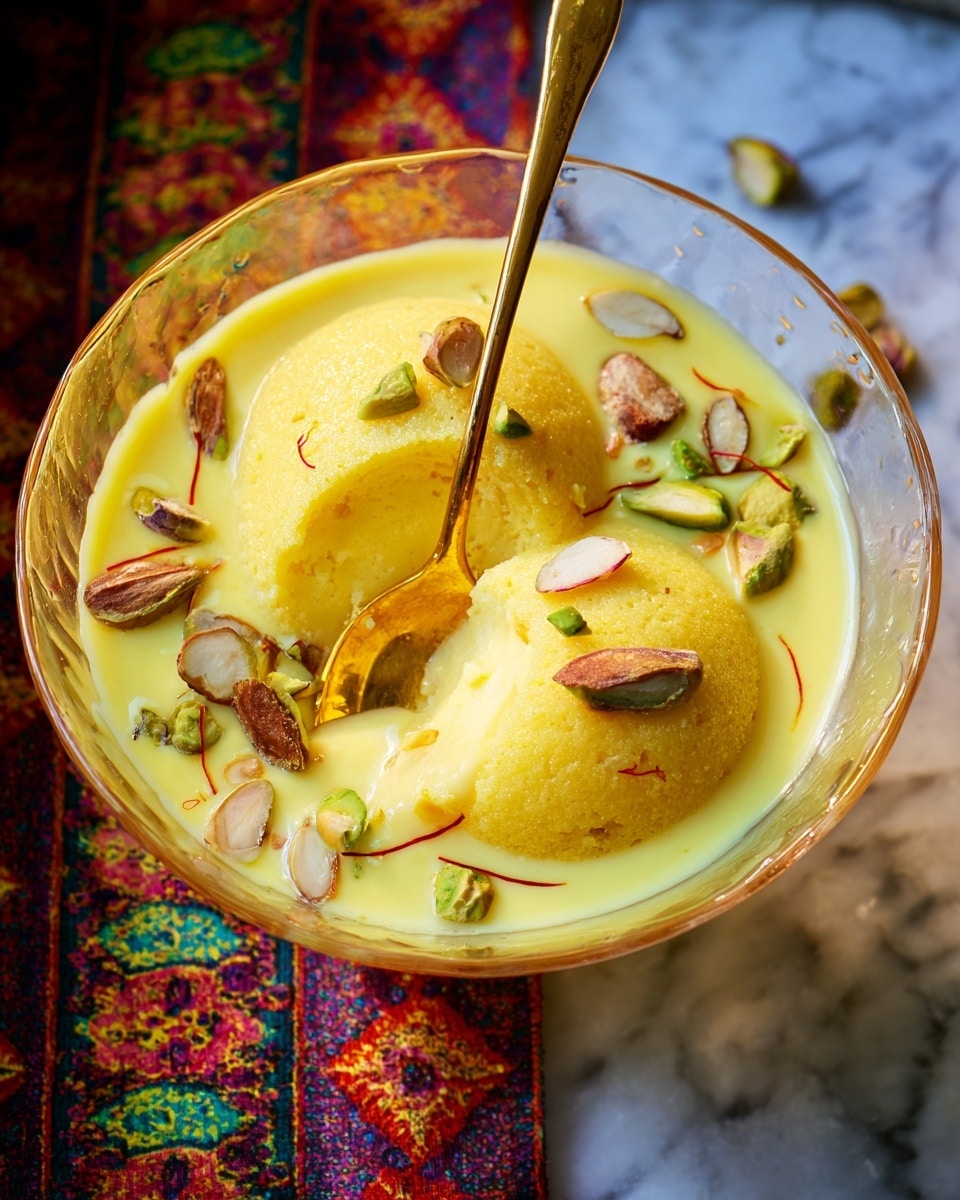
Rasmalai is a classic Indian dessert featuring soft, spongy milk curd balls soaked in fragrant, saffron-infused sweetened milk. This indulgent treat is perfect for celebrations or whenever you crave a rich and creamy delight.
Ingredients
- 1.5 litres milk
- 4 tbsp white vinegar
- 700 ml milk
- Pinch of saffron strands
- 20 g almonds, slivered
- 20 g shelled pistachios, slivered
- ½ tsp ground cardamom
- 100 g caster sugar
- 200 g caster sugar
- 4 green cardamom pods
- 20 g pistachios, finely chopped
- 20 g almonds, finely chopped
Instructions
- Step 1: Put 1 tbsp water in a saucepan to prevent burning, then pour in 1.5 litres milk and bring to a boil over medium heat. Stir gently to mix the film forming on top and sides. When it boils, switch off the heat.
- Step 2: Mix 4 tbsp water with 4 tbsp vinegar, then add this mixture gradually to the hot milk, stirring gently between additions. Let stand undisturbed for 10 minutes to curdle. If no separation occurs, warm gently for another 5 minutes.
- Step 3: Line a large colander with cheesecloth or muslin and strain the curdled milk. Rinse the curds under cold water to remove vinegar taste and let drain.
- Step 4: Squeeze the cheesecloth to remove excess moisture, then hang it from the tap to drain completely.
- Step 5: For the rabri, bring 700 ml milk to boil in a saucepan over medium heat. Add saffron, slivered almonds, pistachios, and ground cardamom while stirring gently. Once it bubbles, add 100 g caster sugar and cook for 5 minutes. Remove from heat and set aside.
- Step 6: When curds are drained, remove from cloth and place on a clean surface. Break into crumbs and knead gently with the heel of your hand for 7–8 minutes to form a smooth dough, avoiding overworking.
- Step 7: Shape the dough into a log and divide into 10–14 equal pieces. Roll each into a smooth ball, then gently flatten slightly, accepting minor cracks at the edges.
- Step 8: To prepare sugar syrup, combine 200 g caster sugar, 4 green cardamom pods, and 950 ml water in a deep saucepan. Heat until sugar melts, then bring to boil. Remove cardamom pods.
- Step 9: Carefully add the flattened rasmalai balls to the boiling syrup, cover, and cook for 10 minutes. Then raise heat to medium-high and cook for 2–3 more minutes. Remove from heat, uncover, and allow to cool completely in the syrup.
- Step 10: Warm the rabri slightly. Remove rasmalai from syrup, gently squeezing each to drain excess syrup without breaking. Place rasmalai in the warm rabri, cover, and let sit at room temperature for 5–6 hours before serving.
Tips & Variations
- Use fresh full-fat milk for richer flavor and better texture.
- Soaking saffron strands in warm milk before adding enhances color and aroma.
- For variation, add rose water or kewra water to the rabri for floral notes.
- Ensure gentle kneading of curds to avoid tough rasmalai balls.
Storage
Store rasmalai in an airtight container in the refrigerator for up to 2 days. Serve chilled or at room temperature. Reheat the rabri gently before serving for best taste if cooled.
How to Serve
Serve this delicious recipe with your favorite sides.
FAQs
Can I use homemade paneer instead of curdled milk curds?
Yes, fresh homemade paneer with a soft, smooth texture works well. Avoid pressed or dry paneer, as the texture affects the rasmalai softness.
How can I prevent the rasmalai balls from breaking while cooking?
Handle the balls gently and avoid over-kneading when shaping. Make sure the sugar syrup is boiling before adding them and cook them covered to keep moisture in, which helps maintain their shape.
Print
Homemade Rasmalai with Saffron, Almonds, and Pistachios Recipe
- Total Time: 6 hours 15 minutes
- Yield: 10–14 servings 1x
- Diet: Vegetarian
Description
Rasmalai is a classic Indian dessert consisting of soft, spongy milk curd balls simmered in a fragrant saffron and cardamom-infused sweetened milk syrup called rabdi. This recipe involves making homemade chenna (milk curd), gently simmering the balls in lightly spiced sugar syrup, and then soaking them in creamy rabdi for a rich, luscious flavor. Ideal for festive occasions or special treats, rasmalai delights with its delicate texture and aromatic taste.
Ingredients
For the Chenna (Milk Curd):
- 1.5 litres milk
- 4 tbsp white vinegar
- 1 tbsp water
For the Rabdi:
- 700 ml milk
- Pinch of saffron strands
- 20 g almonds, slivered
- 20 g shelled pistachios, slivered
- ½ tsp ground cardamom
- 100 g caster sugar
For the Sugar Syrup:
- 200 g caster sugar
- 950 ml water
- 4 green cardamom pods
For Garnish:
- 20 g pistachios, finely chopped
- 20 g almonds, finely chopped
Instructions
- Prepare the Milk for Chenna: Put 1 tablespoon of water in a saucepan to prevent the milk from burning, then pour in 1.5 litres of milk and bring it to a boil over medium heat. As the milk foams and forms a film on top and around the sides, continuously stir and mix the film to avoid burning. Once it comes to a boil, turn off the heat.
- Curdle the Milk: Mix 4 tablespoons of water with the vinegar then gradually add this vinegar mixture to the hot milk, stirring gently between each addition. Let the mixture stand undisturbed for 10 minutes to allow the milk to curdle into large milk curds. If separation doesn’t occur, return to low heat for an additional 5 minutes.
- Strain the Curds: Line a large colander with cheesecloth, muslin, or a clean tea towel and pour the curdled milk into it. Allow the whey to strain through completely. Rinse the curds under cold water to remove the vinegar taste. Let it drain well.
- Drain the Chenna: When most of the whey has drained, lift the cloth and squeeze out the excess moisture. Tie the cloth and hang it from the tap or any suitable place to drain for at least 30 minutes until completely dry to touch.
- Make the Rabdi: In a saucepan, bring 700 ml milk to boil over medium heat. Reduce the heat and stir in saffron strands, slivered almonds, slivered pistachios, and ground cardamom. When the milk starts to bubble, add 100 g caster sugar and cook for about 5 minutes until it boils again. Remove from heat and set aside.
- Knead the Chenna: Once the chenna is completely drained, remove it from the cloth and place on a clean surface. Break into small crumbs and knead gently with the heel of your hand for 7-8 minutes until smooth but not overworked.
- Shape the Rasmalai Balls: Roll the kneaded chenna into a log shape and cut into 10-14 equal pieces. Roll each piece into a smooth ball using your palms and gently flatten slightly. Don’t worry if a few cracks appear at the edges.
- Prepare the Sugar Syrup: Combine 200 g caster sugar, 950 ml water, and 4 green cardamom pods in a deep, wide saucepan. Cook over medium-high heat until sugar dissolves, then bring to a boil on high. Remove cardamom pods.
- Cook the Rasmalai Balls: Carefully drop the prepared rasmalai balls into the boiling sugar syrup. Cover with a lid and cook for 10 minutes. Then increase heat to medium-high and cook uncovered for another 2-3 minutes. Remove from heat and let the balls cool completely in the syrup.
- Combine Rasmalai and Rabdi: Slightly reheat the prepared rabdi. Remove rasmalai balls from the sugar syrup and gently squeeze each between your palms to remove excess syrup without breaking them. Add the rasmalai to the warm rabdi, cover, and let it rest at room temperature for 5-6 hours to absorb flavors before serving.
Notes
- Use full-fat milk for the creamiest chenna and rabdi texture.
- Be gentle while kneading the chenna to avoid making it rubbery.
- Do not overcook the rasmalai balls to keep them soft and spongy.
- Soaking time in rabdi is essential for best flavor and softness.
- Rasmalai can be served chilled or at room temperature as per preference.
- Ensure to rinse the curds well after curdling to remove vinegar taste completely.
- Prep Time: 45 minutes
- Cook Time: 30 minutes
- Category: Dessert
- Method: Stovetop
- Cuisine: Indian
Keywords: rasmalai, indian dessert, milk curd balls, rabdi, saffron pistachio dessert, traditional sweets, homemade rasmalai